MANUFACTURING SOLUTIONS
Every shift is a chance to make the next one safer.
Turn shop-floor observations into clear actions, prepared teams and lessons that travel across your plant. Locstatt connects daily HSE activity with the follow-through that makes improvement possible.
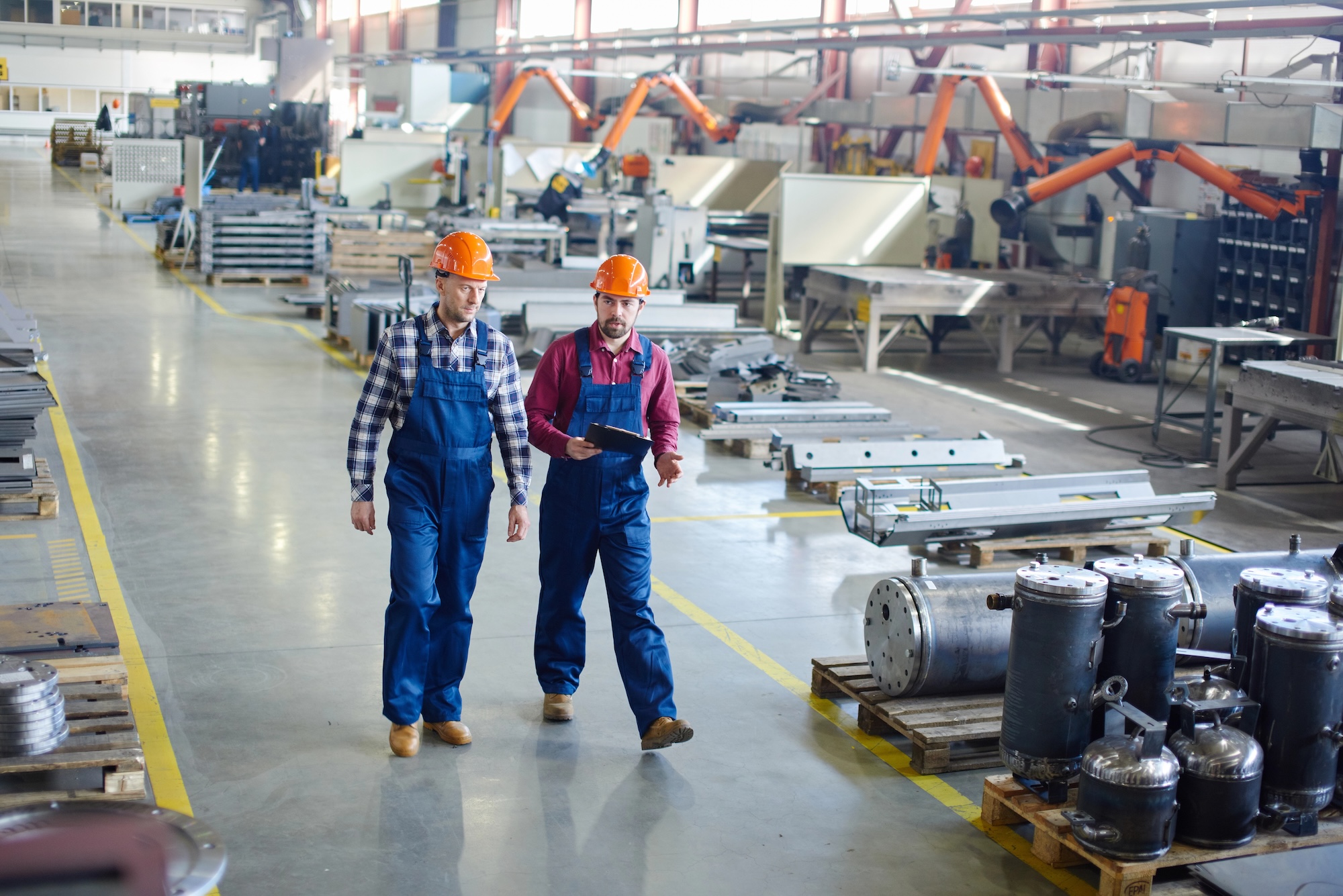
From the Shop Floor To the next practical improvement.
Production keeps moving.
Safety needs continuity.
Equipment, people and priorities change throughout the day. Help operators, supervisors and HSE teams work from a clearer picture of the risks, the actions and the learning that matter.
Equipment concerns get noticed. Follow-up gets delayed.
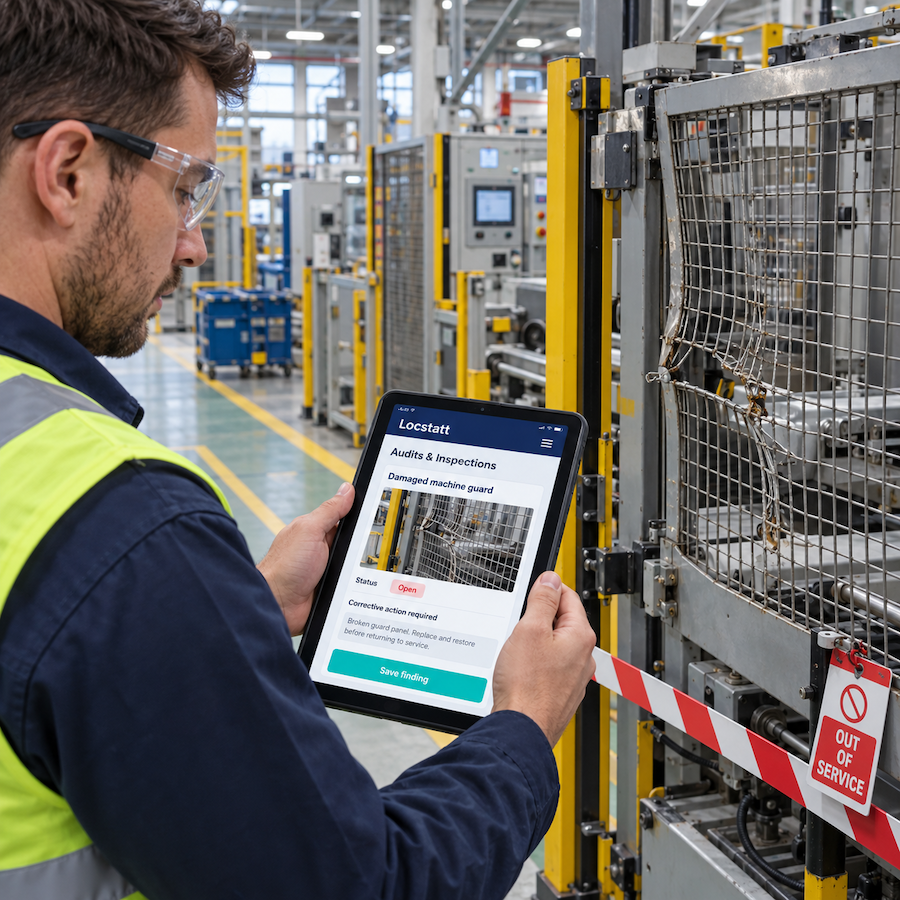
A damaged guard, fluid leak or obstructed access route can be reported repeatedly without a clear resolution.
Give operators a practical way to document what they see. Use tailored checks, assign follow-up and retain evidence of the response so supervisors can see what still needs attention.
Audits & Inspections · Hazard Hunts · Corrective Actions
The shift changes. Important context disappears.
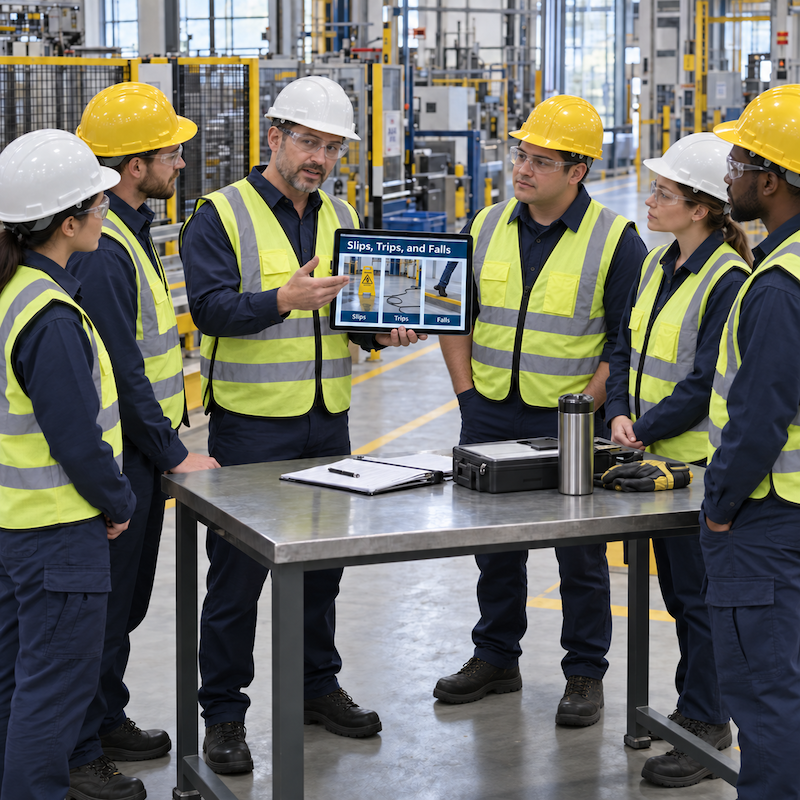
Temporary controls, unresolved concerns and changes to the work are easily lost in verbal handovers.
Keep a written record of safety notes and outstanding concerns. Bring those updates into shift briefings so the incoming team understands the situation and the follow-up required.
People move between tasks. Their readiness needs to stay visible.
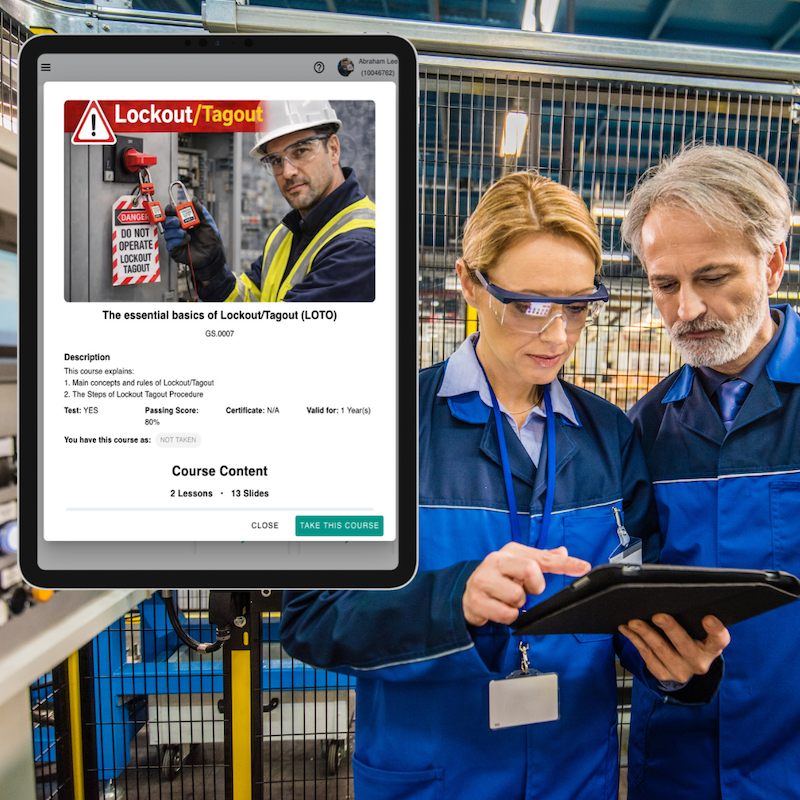
New starters, temporary workers and reassigned operators may have different training needs.
Review training records by role and work area, keep expirations in view and reinforce task expectations through briefings and job safety analysis. Target learning to the work people are about to do.
The same incident returns under a different shift or department.
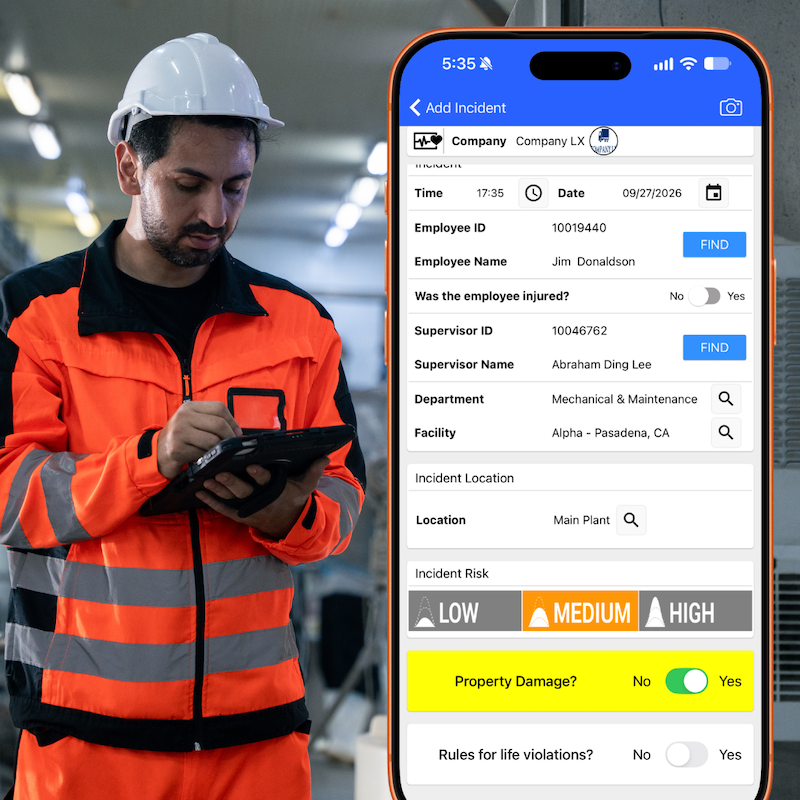
Closing a report does not always mean the underlying problem has been addressed.
Document contributing factors, follow the actions through to closure and make lessons available to other teams. Use the case to inform future checks and training, then look for recurrence.
Incident Reporting · Lessons Learned / NCR · Corrective Actions
Routine work makes familiar hazards easier to overlook.
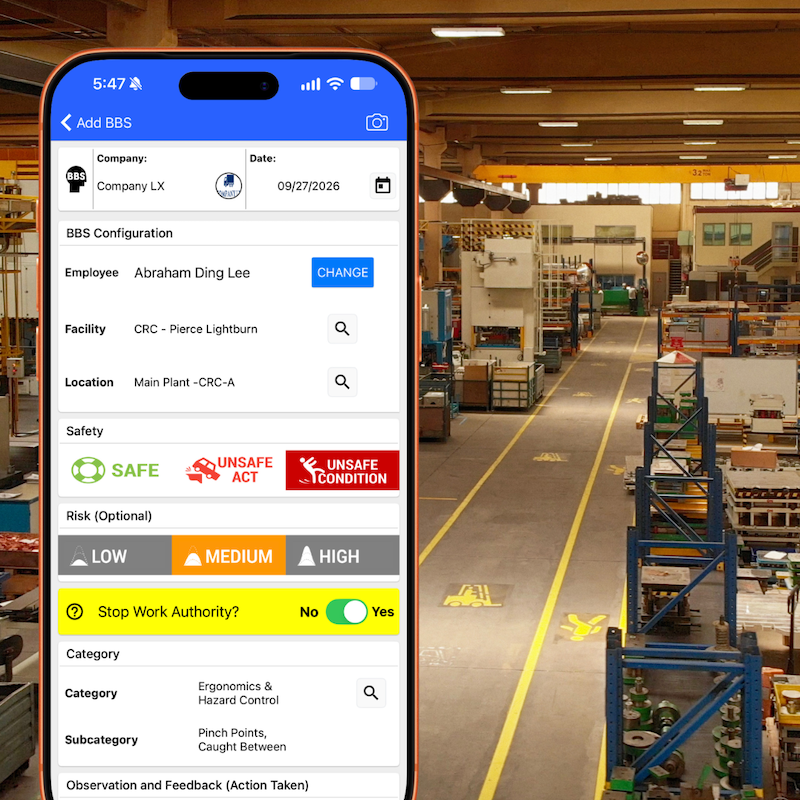
Repetitive handling, busy pedestrian routes and small workarounds can become accepted habits.
Invite workers to describe how the job is actually performed. Capture observations, discuss conditions that make safe work difficult and review the task when equipment, materials or methods change.
Leaders see reports. Workers need to see a response.
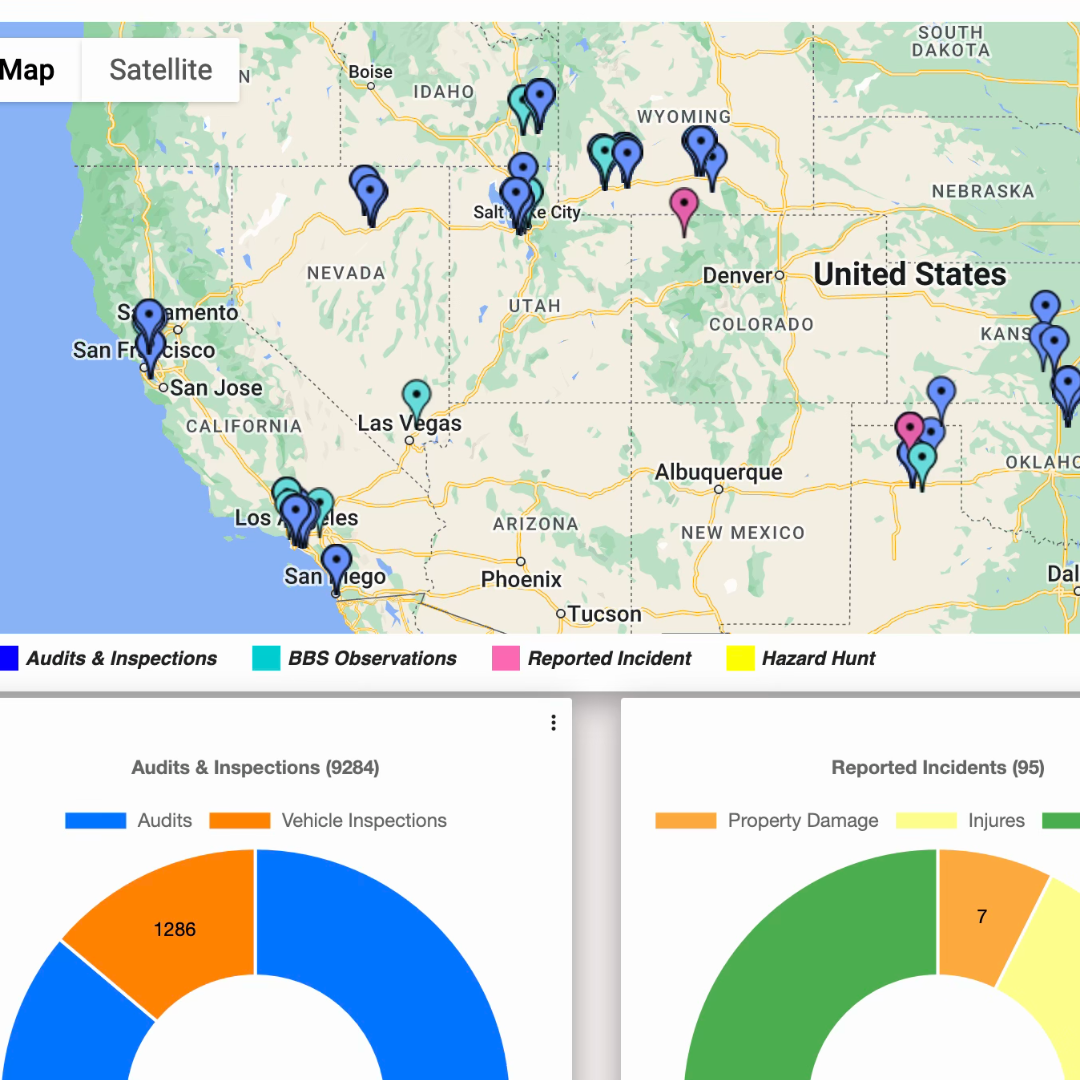
Participation fades when employees cannot see what changed after they raised a concern.
Use reported activity to identify priorities, give specific feedback and share the improvements with the people who helped identify them. Recognize useful contributions and keep the dialogue going.
Find the pattern.
Change the work.
Check what happens next.
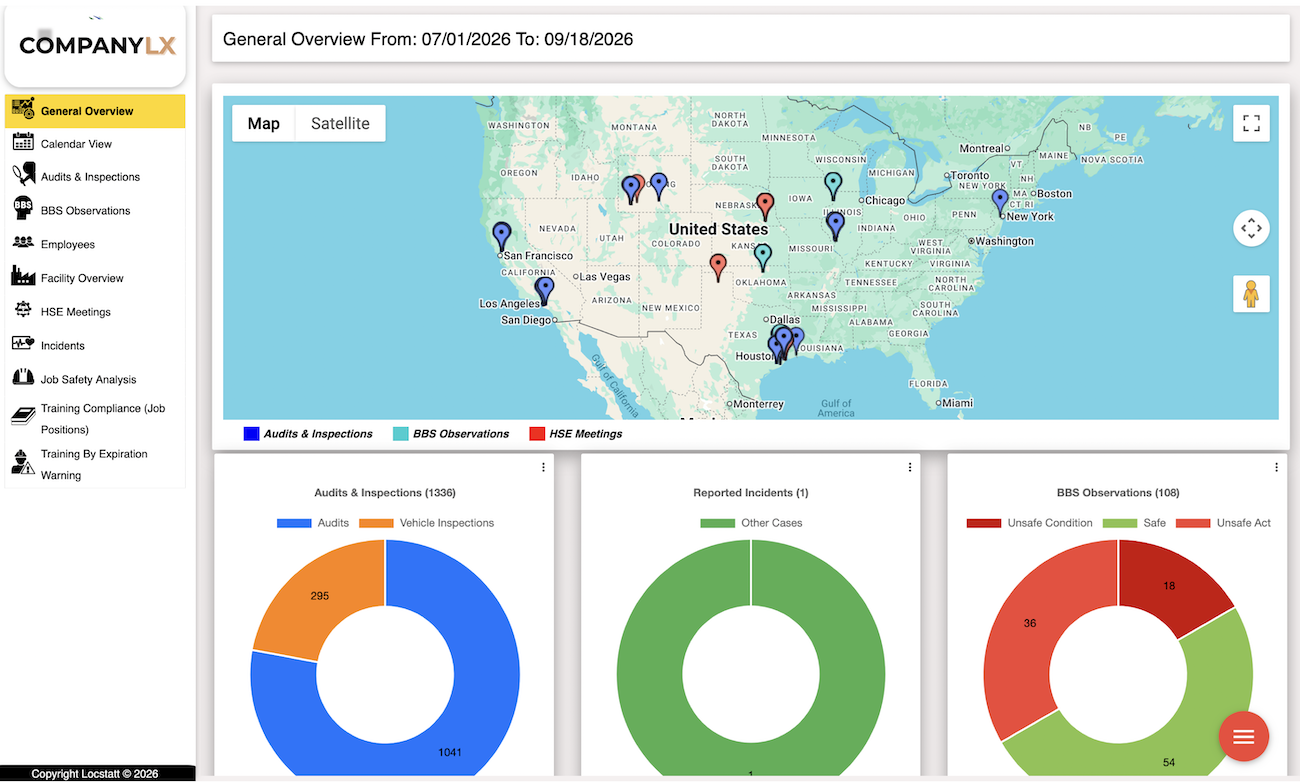
Use the Company Performance Overview to review recurring findings and leading indicators across work areas and teams. Then connect that understanding to an action, a learning opportunity and a follow-up check.
Explore company-wide visibility
Give Participation a Purpose
People know the process.
Make their experience count.
Operators often see the friction in a task before it appears in a management report. Make room for that knowledge. Respond to observations, discuss improvements in HSE meetings and recognize contributions that help others work safely.
Listen
Ask what makes a task difficult to perform safely.
Respond
Give the concern an owner and a visible next step.
Explain
Tell the team what changed and why.
Learn
Bring that knowledge into briefings, courses and future checks.

Built around your plant.
Supported by people.
Configure Locstatt around your work areas, roles and reporting needs. Start with the daily challenges you want to address and work with the support team to shape a practical setup.
Checks that reflect the work
Tailor audit and inspection templates to equipment, PPE and facility conditions relevant to your operation.
Learning that reflects the task
Connect online, in-house and external training records. Use Traina Culture for advanced course creation when your content needs grow.
Follow-up across teams
Help supervisors and HSE leaders keep findings, corrective actions and lessons visible across the areas they oversee.
The safety cycle,
on your shop floor.
Continuous improvement brings the cycle back to prevention. Carry forward the controls, knowledge and experience your teams develop, and keep checking how they work in practice.
Prevent
Connect what your teams inspect, observe and discover with how they plan safe work.
Explore solution
Respond
Give your teams a clear path from what happened to who acts next—and what the whole organization can learn.
Explore solution
Prepare
Keep your workforce trained, qualified and ready for the job. Connect training, qualification tracking and safety meetings in one clear view of workforce readiness.
Explore solution
Understand
Turn field activity into company-wide safety insights. Connect reported cases, leading indicators and performance trends in one integrated HSE system.
Explore solution
Recognize
Turn everyday HSE contributions into meaningful recognition. Give supervisors the tools to build teams, review field activity and encourage progress through skills-based feedback and kudos.
Explore solution
Improve
Use what your teams report to strengthen controls, improve training and make safer practices part of everyday work.
Explore solution
Make improvement
part of every shift.
Tell us about your processes, workforce and safety priorities. We’ll show you how Locstatt can help connect your daily operations with stronger follow-through.